5 legal ways salaried and government employees can reduce tax
First decide old regime or new. Then use 80C, 80D, HRA, home-loan interest and NPS where they apply, and never buy a policy in March just to save tax.

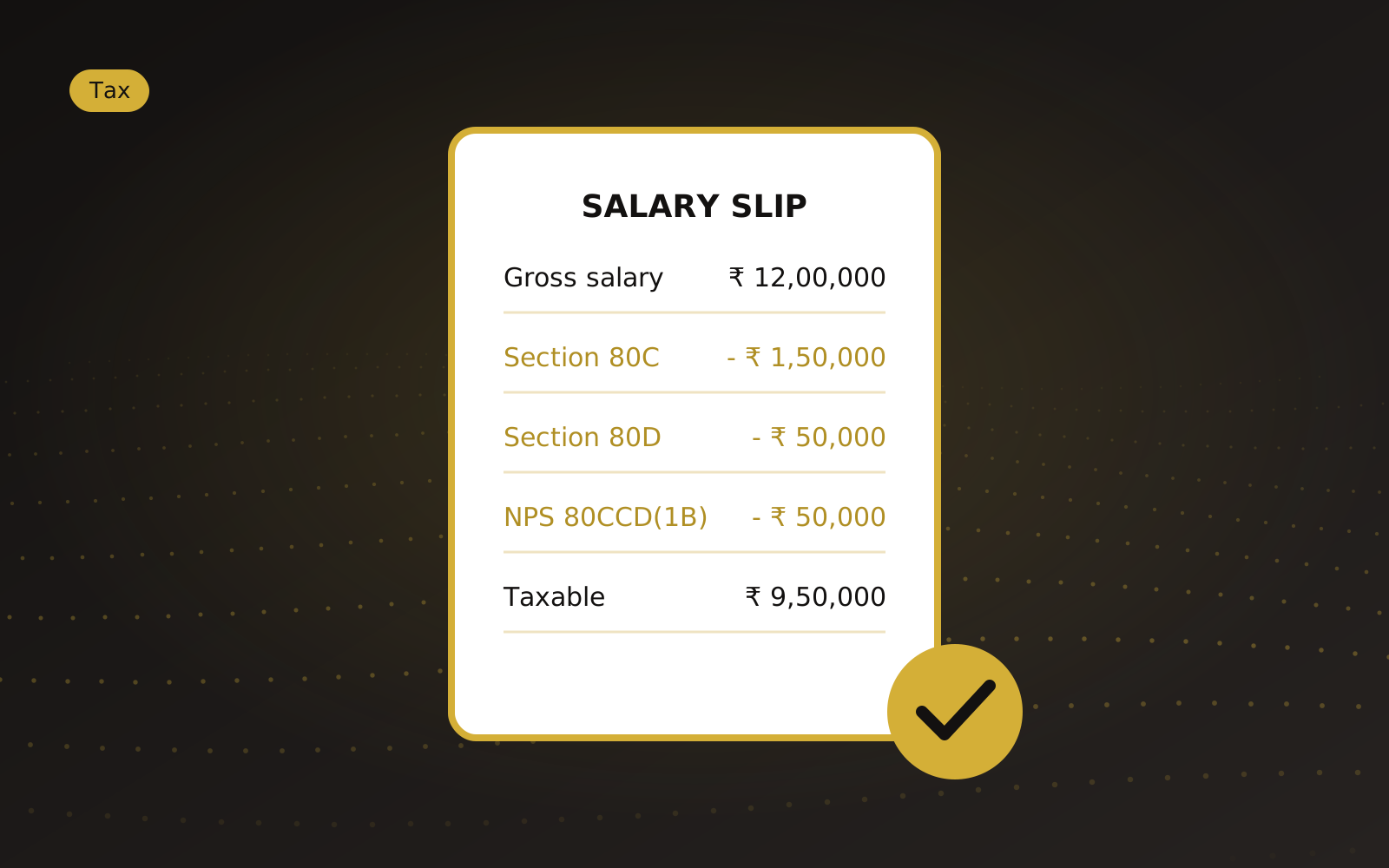
The biggest tax decision for a salaried or government employee is not which deduction to claim but which regime to file under; everything else follows from that. Under the old regime, five deductions do most of the work: Section 80C, 80D, HRA, home-loan interest and NPS. This guide walks through the regime choice first, then each deduction, then the one habit that quietly costs families more than it saves.
Step one: old regime or new?
For FY 2025-26 the new regime is the default. It has lower slab rates, a standard deduction of ₹75,000 for salaried people, and almost no other deductions. The old regime has higher slab rates but allows 80C, 80D, HRA, home-loan interest and more.
The honest split we see in reviews is simple. Many salaried people, especially those renting without a home loan or with few investments, pay less under the new regime. People who pay HRA-eligible rent, service a home loan and already fill 80C through EPF or GPF often pay less under the old regime. The only way to know is to run both calculations with your own figures. Your employer's payroll portal usually lets you compare; the income tax department's calculator does too.
One caution: with only salary income you can switch regimes each year, but the choice has to be told to your employer early, otherwise TDS runs under the default. Check the current year's rules before you decide.
Worth knowing
Run both regimes with your real numbers every April; the right answer can change when your rent, loan or salary changes.
Section 80C: the ₹1.5 lakh you may already be filling
Under the old regime, up to ₹1.5 lakh of eligible payments reduce your taxable income. For many employees it fills itself:
- Your own EPF or GPF contribution, deducted from salary every month.
- PPF deposits, if you have an account.
- ELSS mutual funds, which carry market risk and a three-year lock-in.
- Children's tuition fees for up to two children, within India.
- The principal portion of your home-loan EMI.
- Life insurance premiums, including a term plan.
Add these up before you buy anything new. A government employee with a decent GPF deduction and two school-going children is often already past ₹1.5 lakh by September. Anything bought after that saves no tax at all.
Section 80D: health premiums, including your parents'
Health insurance premiums for yourself, your spouse and children get a deduction of up to ₹25,000 a year under the old regime, and up to ₹50,000 if you are a senior citizen. Premiums you pay for your parents get a separate deduction of up to ₹25,000, or up to ₹50,000 if they are over 60. A small amount within these limits can cover preventive health check-ups.
This is one of the few deductions that pays twice: the policy protects your savings from a hospital bill, and the premium reduces your tax. Pay by any mode other than cash and keep the receipt.
HRA, home-loan interest and NPS
If you live in a rented home and your salary includes house rent allowance, part of it is exempt under the old regime. The exempt amount is the lowest of three figures: the HRA you receive, rent paid minus 10 percent of basic salary, and 50 percent of basic in a metro or 40 percent elsewhere. Keep rent receipts, and if annual rent crosses ₹1 lakh, you need the landlord's PAN.
If you have a home loan on a self-occupied house, interest of up to ₹2 lakh a year is deductible under Section 24 in the old regime, in addition to the principal under 80C. A family with both HRA and a home loan in another city can claim both, and this combination is the most common reason the old regime wins.
NPS works through two different sections. Your own contribution gets an extra deduction of up to ₹50,000 under Section 80CCD(1B), over and above 80C, in the old regime only. The piece people miss is Section 80CCD(2): the employer's contribution to your NPS. This deduction is available in the new regime as well, up to a percentage of basic salary that is higher for central government employees than for private-sector ones. Government employees are usually already covered; private-sector employees often have to ask HR.
| Deduction | Old regime | New regime |
|---|---|---|
| 80C, 80D, HRA, home-loan interest | Yes | No |
| Own NPS 80CCD(1B) | Yes | No |
| Employer NPS 80CCD(2) | Yes | Yes |
| Standard deduction | ₹50,000 | ₹75,000 |
Rules and limits change with each Budget, so treat the table as a map, not the territory, and check the current year's rules.
The March mistake
Every year in the last week of March we meet people who have just bought an insurance-savings product because someone told them it would "save tax". It does, in the narrow sense. It also locks them into years of premiums for a product they did not need and would not have chosen in October. The tax saved in year one is small; the premiums over fifteen years are not.
Protection and tax planning are separate decisions. Buy a term plan for protection and a health plan for hospital bills because your family needs them, in whichever month that is. Fill 80C with things you would want anyway: EPF, PPF, tuition, loan principal. Then decide the regime. Tax saving is a by-product of a good plan, never the reason for one.
What to do this week
- Add up your EPF or GPF, tuition fees and home-loan principal to see how much of 80C is already filled.
- Run your salary through both regimes on the income tax department's calculator.
- Ask HR whether employer NPS contribution under 80CCD(2) is available to you.
If you would like someone to walk through both regimes with your payslip, book a free 30-minute review with one of our directors.
This article is for information only and is not investment, tax or legal advice. Figures are illustrative. Mutual fund investments are subject to market risks; read all scheme-related documents carefully before investing. Bhavya Sampada is an AMFI-registered Mutual Fund Distributor, ARN 266666.