After a loss: a term claim settled, and a plan that gave Lakshmi time
When Lakshmi lost her husband, we helped file the term claim and EPF paperwork, parked the money safely for six months, and only then built a written plan around her needs.

Names changed; shared with the client's consent.
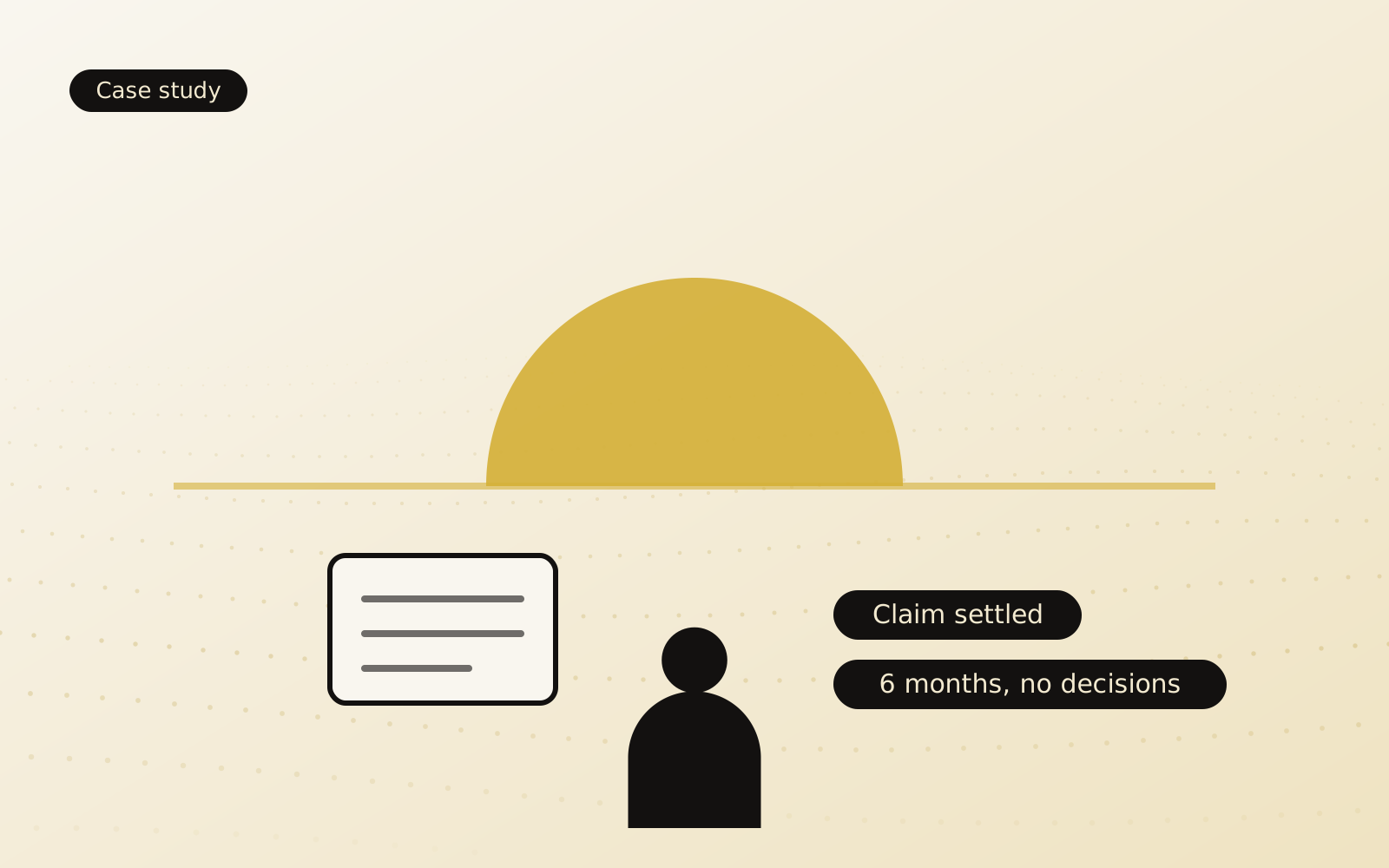
When Lakshmi's husband died suddenly at 54, the first thing she needed was not a plan; it was for someone to help with the paperwork and then to leave her alone for a while. We helped file the term-insurance claim and the EPF and gratuity forms, put the money somewhere safe for six months with no decisions attached, and only then sat down to build a written plan around her monthly needs, her daughter's wedding and her own health cover. This case is about what to do, and what not to do, in the months after a loss.
Where they started
Lakshmi, 52, lives in Secunderabad. Her husband had worked for a private engineering firm for 26 years. Their daughter is 26 and engaged; their son is 23 and working in Chennai.
Her husband had been a client of ours for some years. He had a term plan of a sensible size, EPF, gratuity due, some mutual fund holdings, a small fixed deposit, and a fully paid house. Lakshmi had never handled the family's money. She knew where the folder was, and that was all.
Within days of the funeral, two relatives had suggested where to "put the money" and a bank officer had called about a product. She called us because her husband had told her to, years ago, "if anything happens".
What we found
We asked for nothing in the first week except the death certificate and the folder. We made a list of what needed filing and by when.
The term plan nominee was Lakshmi, correctly recorded. That detail, checked years earlier at a review, made everything that followed simpler.
The EPF nomination was also in her name. Two older mutual fund folios had no nominee, which meant a transmission process with a legal heir certificate.
She had no health cover of her own; her husband's employer policy had ended with his employment. She did not know what her household spent in a month, and we did not ask yet.
Worth knowing
After a loss, the only financial decision that cannot wait is the paperwork. Every other decision can wait six months, and should.
What we did
In the first month, we helped file the term claim, the EPF withdrawal and EPS pension forms, and the gratuity form with the employer. We began the nominee transmission on the mutual fund folios and the legal heir process for the two without a nominee. Her son came from Chennai for a week to sign where needed.
We also arranged her own health cover that month, because that could not wait: an individual policy with a super top-up.
When the term claim was paid, about seven weeks after filing, and the EPF and gratuity followed, we put the money in a safe, liquid place that needed no decisions. We gave her a one-line note: "Nothing needs to be decided about this money until April." We asked her to show it to anyone who called with a suggestion.
Then we did not meet for several months.
In the sixth month, she asked to meet. We started with the question we had held back: what does the house spend in a month? She had kept a notebook for three months by then and knew. Say it was ₹48,000.
From that, over three meetings, we wrote a plan. It had four parts.
- A monthly income arrangement: an amount set aside in a conservative option to produce a steady monthly transfer to her account, so that her bank balance behaves the way a salary used to.
- Her daughter's wedding, eighteen months away: a sum set aside separately in a safe option.
- A longer-term portion for her own later years, started gradually rather than in one go.
- An emergency fund, separate from everything else.
Her son and daughter were in the room for the final meeting at her request, and both are now nominees on everything.
What changed
The term claim was settled. EPF, EPS and gratuity were received. All mutual fund folios are now in her name, with her children as nominees. She has her own health cover with a super top-up.
For six months, nothing was bought, nothing was invested, and nothing was decided. That was deliberate.
Now she has a written plan on three pages. Money arrives in her account every month in a predictable amount. Her daughter's wedding is funded and ring-fenced. She reviews the plan with us twice a year and can explain every line of it.
What you can take from this
Check the nominee on every policy, EPF account and mutual fund folio in your house this week. It is the single kindest thing you can do for the person who will have to handle things.
If you have just lost someone, let the paperwork be the only thing you do. Ask someone you trust to help file the claims. Then put the money somewhere safe and simple, and give yourself six months. Anyone who tells you a decision cannot wait is usually selling something.
Buy your own health cover early, even if an employer or a spouse's policy covers you today.
And if you are the one with the term plan, tell your family who to call. Write it in the folder.
Shared with the client's consent. Names and some details changed. Every family's situation is different; nothing here is a recommendation for yours.
This article is for information only and is not investment, tax or legal advice. Figures are illustrative. Mutual fund investments are subject to market risks; read all scheme-related documents carefully before investing. Bhavya Sampada is an AMFI-registered Mutual Fund Distributor, ARN 266666.