Coming home from Dubai: a returning family's money, put in order
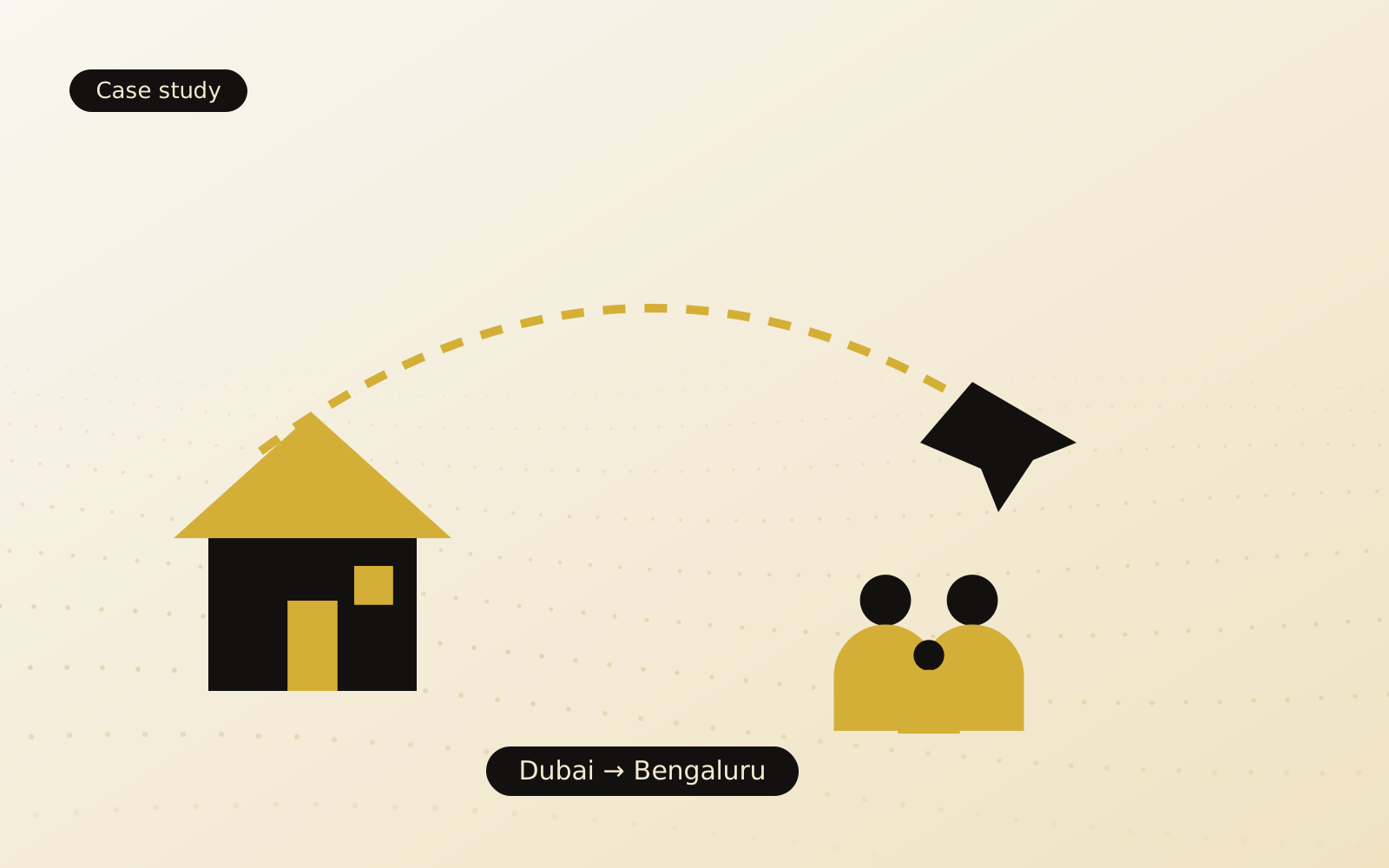
A family returning from Dubai to Bengaluru had scattered accounts, no Indian health cover and a house to buy. We sequenced it: cover first, then accounts, then the house, with retirement intact.

Names changed; shared with the client's consent.
Karthik and Priya were moving back from Dubai to Bengaluru after eleven years, and their money was in more places than they could list from memory. The most urgent gap was not the house they wanted to buy; it was that nobody in the family had Indian health cover. We put the pieces in order: health and term cover before landing, account conversions after they became residents, an emergency fund in India, a house budget that did not eat their retirement, and SIPs for the children's education. This case is for every NRI family planning a return.
Where they started
Karthik, 40, was a project manager in Dubai. Priya, 38, worked part-time in a school there. Their children are 11 and 8. They were returning to Bengaluru, where Karthik had a job offer and Priya's parents live.
They called us four months before the move. Between them they had two NRE accounts, one NRO account, dirham savings in Dubai, an old Indian life policy, mutual fund holdings bought as NRIs, and a deposit paid years ago on a flat they never bought.
Their Dubai employer health cover would end the day Karthik resigned. They had no Indian health policy. Karthik's term plan was bought in Dubai and he was not sure it would hold once he was resident in India.
Their main question was about the house. They wanted to buy in Bengaluru within six months of landing and wanted to know how much they could spend.
What we found
We asked for every statement and policy and built a single list on one page. That list was the most useful thing we produced in the first month.
The health gap was the biggest risk. Between Karthik's last day in Dubai and any new Indian employer cover, the family would be uninsured. And employer cover ends if the job ends.
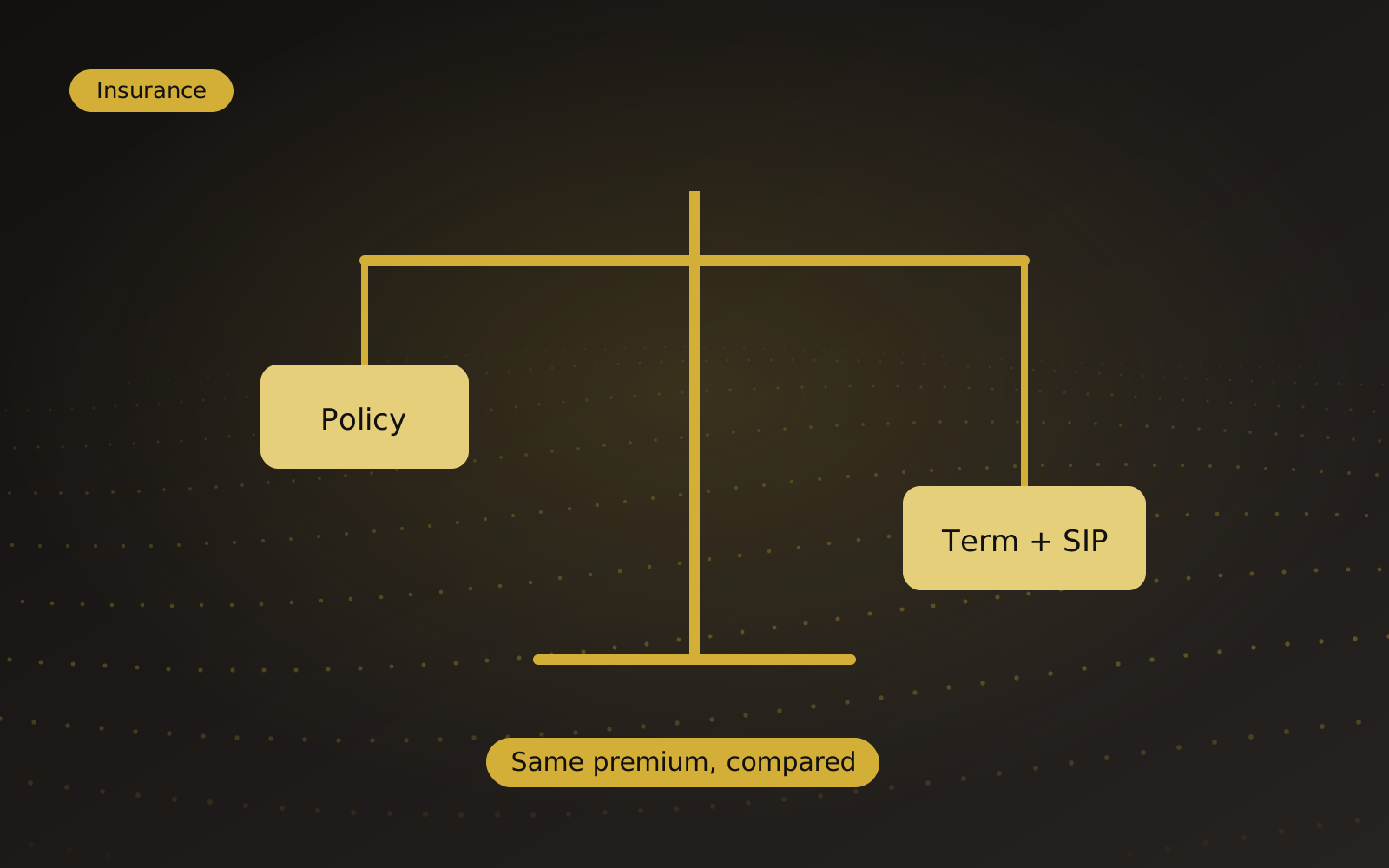
The Dubai term plan had a residency clause. A fresh Indian term plan was cleaner, and easier to buy while he was still salaried with a clear income record.
The NRE and NRO accounts would need redesignation under FEMA rules once they became residents. The timing depends on residential status in the year of return, and the first-year tax position is tricky, so we told them to confirm with a chartered accountant.
The old Indian life policy was an endowment with low cover, paid out of habit.
The house budget they had in mind would have used most of their foreign-currency savings and left nothing for retirement, which they assumed they would "sort out later".
Worth knowing
Returning NRIs: buy Indian health cover before you resign abroad, not after. The gap between two employer policies is where the risk sits.
What we did
We sequenced it in four phases.
Before landing, while Karthik was still employed: an Indian family-floater health policy with a super top-up, starting before his last working day. A fresh Indian term plan for Karthik, with medicals done on a short visit. Nominees updated everywhere. The old endowment made paid-up, since the term plan now gave the real cover.
In the first month after landing: we opened a resident savings account and built a six-month emergency fund in India from part of the dirham savings, converted gradually rather than in one go. We did not touch the rest of the foreign-currency savings yet.
In months two to four: once their residential status was clear, we worked with their chartered accountant to redesignate the NRE and NRO accounts, change the mutual fund folio status and complete KYC. We chased the old property deposit and recovered most of it.
In months four to six: we set the house budget. We started from their retirement number, worked out the monthly SIP needed to reach it, and set the house budget as what remained. It was lower than they had planned. They chose a smaller flat rather than one that would have stopped their retirement SIPs.
Then we started two SIPs for the children's education, one for each child, sized for the years left until each one turns 18.
What changed
The family had health cover from the day Karthik resigned. Karthik's term plan is Indian and clean. The endowment policy stopped costing them money.
All accounts are regularised to resident status. The mutual fund folio is under a resident KYC. A chartered accountant handled the first-year tax filing.
A six-month emergency fund sits in an Indian liquid option. The house was bought within budget, with a home loan whose EMI fits beside the retirement SIP rather than instead of it.
Two education SIPs and the retirement SIP are running. Nothing was bought in a hurry and nothing was sold in a panic.
What you can take from this
If you are returning to India, make the list first: every account, policy and folio on one page. You cannot sequence what you cannot see.
Buy health cover before you resign. Buy an Indian term plan while your foreign income record is still fresh.
Do not guess at account redesignation or the first-year tax position; check the current year's rules and use a chartered accountant.
Set the house budget from the retirement number, not the other way round. The house is visible; retirement is not. That is exactly why it needs to go first.
Shared with the client's consent. Names and some details changed. Every family's situation is different; nothing here is a recommendation for yours.
This article is for information only and is not investment, tax or legal advice. Figures are illustrative. Mutual fund investments are subject to market risks; read all scheme-related documents carefully before investing. Bhavya Sampada is an AMFI-registered Mutual Fund Distributor, ARN 266666.