The 20-year savings policy: what it really gives you, and what to do if you have one
A savings policy mixes a small life cover with an opaque savings plan. Continue, make it paid-up, or surrender, case by case, and never before term cover is in place.

A 20-year savings policy, whether endowment, money-back or unit-linked, gives you a modest life cover and a savings component whose workings are hard to see. It usually does neither job as well as a term plan and a mutual fund SIP would do them separately. This guide explains how to read the policy you hold, the three options open to you, and the one rule that must come before any change.
What these policies are, and why the cover is small
An endowment or money-back policy promises a sum assured on death, plus a maturity amount if you live to the end of the term. Part of each premium pays for the cover, part goes to the insurer's costs, and the rest is invested on your behalf. A unit-linked policy works similarly but shows the investment as units, with charges deducted along the way.
There is nothing improper about these products. Insurers are regulated, the terms are disclosed, and for some families the forced discipline of a 20-year premium has real value. The issue is fit. Most families who hold one bought it for the life cover, and the life cover is the weakest part.
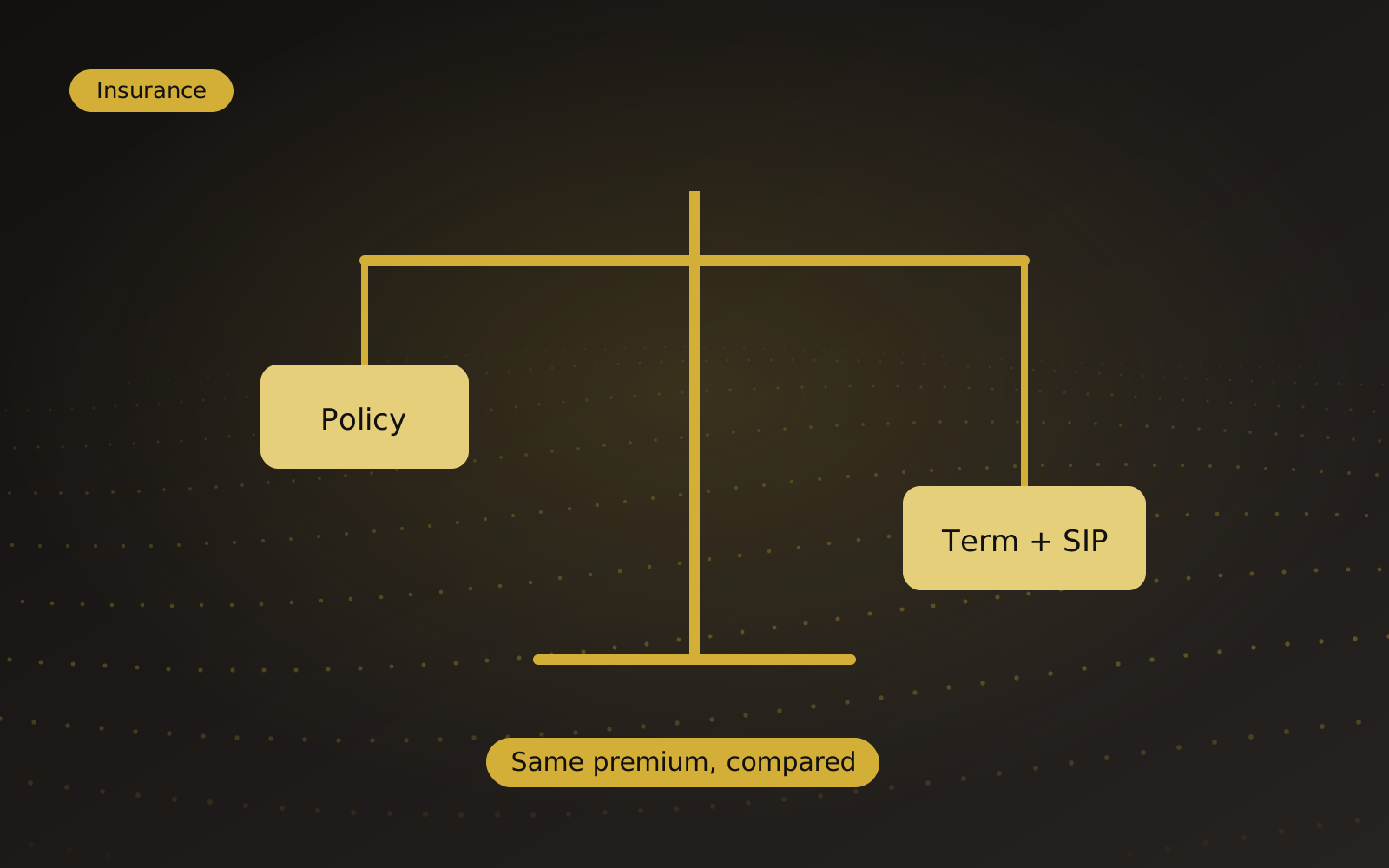
Life cover should replace your income for your family. A common rule is ten to fifteen times annual income. Say you earn ₹12 lakh a year; that points to ₹1.2 crore to ₹1.8 crore of cover. A savings policy with a ₹10 lakh sum assured might cost ₹50,000 a year. A term plan with ₹1 crore of cover for a healthy 35-year-old non-smoker typically costs a fraction of that, because every rupee buys cover. The savings policy's ₹10 lakh would support a family for perhaps a year. That is the gap most people do not see until a review.
Why the savings part is opaque
With an SIP in a mutual fund, you can see the expense ratio, the holdings, and the value of your units every day. With a savings policy, the bonus declared each year, the charges deducted, and the final maturity value are harder to trace. The illustration you were shown at purchase used assumed rates, and the actual outcome depends on the insurer's declared bonuses over two decades. It may turn out fine. The point is that you cannot easily check, and what you cannot check you cannot plan around.
How to read your policy
Pull out the policy document and find these five numbers. If you cannot find them, the insurer's helpline must give them to you.
- Annual premium and the number of years still to pay
- Sum assured on death
- Current surrender value, which is what you would receive if you stopped today
- Paid-up value, which is the reduced sum assured if you stop paying but leave the policy to run
- Maturity date and the projected maturity amount, with its assumptions
Worth knowing
Before you decide anything about a savings policy, find its surrender value and its paid-up value in writing.
Your three options
Each policy is different, and so is each family. These are the choices; the right one depends on your numbers.
| Option | When it tends to fit |
|---|---|
| Continue to maturity | Fewer than three to four years left, or surrender value far below premiums paid |
| Make it paid-up | Many years left, surrender value poor, but you want to stop premiums |
| Surrender and redirect | Early in the term, and the freed premium can fund a term plan plus an SIP |
Continue when you are close to the end. The maturity amount is near, the loss from surrendering is largest, and the premiums left are few.
Make it paid-up when the surrender value is low but you do not want to keep paying. The policy stays in force with a reduced sum assured, you pay nothing further, and you collect the paid-up amount at maturity. This is often the quiet middle path.
Surrender when you are early in the term, the surrender value is tolerable, and the same premium would now buy a proper term plan and start a monthly SIP for the goal the policy was meant to serve. Under the old tax regime, early surrender may claw back earlier Section 80C deductions, and the proceeds may be taxable depending on the premium-to-cover ratio. Check the current year's rules before you act.
Do the arithmetic for your own policy. Two families with the same product can reach opposite answers.
The rule that comes first
Never surrender or stop a savings policy before a term plan is in force. Not applied for, not under medical examination, but issued and the first premium paid. A gap of even a month without cover is a risk no saving is worth. Buy the term plan, wait for the policy document, and only then decide what to do with the old one.
The same applies to health. If the savings policy came with a rider for critical illness or accident, check whether you need a standalone health policy or super top-up before letting the rider go.
What to do this week
- Find every savings-type policy in the house and write down the five numbers above for each one.
- Work out your family's income-replacement need, ten to fifteen times annual income, and compare it with the total cover you actually hold.
- Request a term plan quote for the gap, so you know what redirecting the premium would buy, before deciding anything about the old policy.
Bring the policy documents to a free 30-minute review with one of our directors and we will work through the three options with you, case by case.
This article is for information only and is not investment, tax or legal advice. Figures are illustrative. Mutual fund investments are subject to market risks; read all scheme-related documents carefully before investing. Bhavya Sampada is an AMFI-registered Mutual Fund Distributor, ARN 266666.